Insight · Social strategy
Nobody's seeing your posts
Read article →
Two channels, two very different jobs. Organic social builds attention and trust. Paid social puts your message in front of the right people at scale. The mistake is treating them as interchangeable.
If you're deciding where your marketing budget should go, the answer isn't simply organic or paid. It depends on what you're trying to achieve, how quickly you need results, and whether you have the creative and strategy to make either channel work.
Here's how to decide.
| Organic social | Paid social | Best approach |
|---|---|---|
| Builds attention over time | Buys targeted reach | Use both when budget allows |
| Slower to compound | Faster to test and scale | Use paid for speed |
| Relies on consistency | Relies on creative + targeting | Keep creative quality high |
| Good for trust and brand | Good for leads and sales | Match the channel to the goal |
Organic social is everything you publish without paying the platform to distribute it. Posts, short-form video, stories, community management, thought leadership and the rest of the content that sits on your profiles.
Its biggest advantage is that it compounds. A useful post can keep introducing people to your business after you publish it. A strong profile gives someone who has already heard of you somewhere else a reason to trust you.
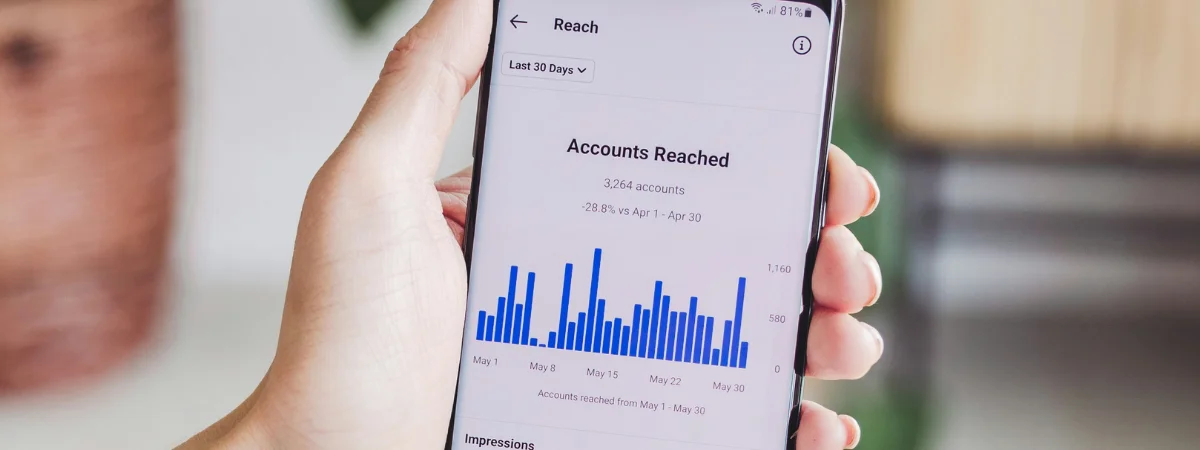
But organic reach is not what it used to be. Platforms increasingly decide what gets shown in the feed, and simply posting consistently does not guarantee that your followers will see your content. (We've written before about why nobody sees your posts anymore - it's a platform problem, not a content problem.)
That doesn't make organic social pointless. It means the job has changed.
Organic social works best when you want to:
The important distinction is that organic social is usually a longer-term asset. You are building an audience and a body of content, not simply buying clicks.
Paid social is different. Instead of waiting for the algorithm to decide who sees your content, you pay to put it in front of a defined audience.
That makes it much easier to test an offer, launch a product, generate leads or reach a new market without waiting months for organic reach to build.
If the offer is unclear, the creative is poor or the landing page doesn't convert, increasing the budget won't fix the problem. It just makes the problem more expensive.
Paid social works best when you want to:
This is where the comparison gets misleading.
Organic social doesn't have a media spend, but it isn't free. Someone still needs to develop the strategy, create the content, film or design it, write the copy, publish it, manage the community and analyse what is working.
Paid social has an obvious cost because you are paying the platform for distribution. But it can also produce measurable results much faster.
The question shouldn't be "which is cheaper?" It should be "which produces the outcome I need at an acceptable cost?"
A £0 organic campaign that produces no leads is not cheaper than a paid campaign that produces qualified leads at a profitable cost.
Organic and paid social should not be judged by the same metrics.
For organic social, look at metrics such as:
For paid social, the focus should move closer to the business outcome:
A post with 100,000 views might be great for awareness and still produce zero customers. A paid campaign with 20,000 impressions might produce 30 qualified leads. Neither result is automatically better. It depends on the objective.
The most common mistake is expecting one channel to do everything.
Some businesses post organically three times a week and wonder why they aren't generating leads. Others put money behind every post and wonder why their advertising costs keep rising.
Both approaches miss the point.
Organic content should give people a reason to believe you. Paid social should help you reach more of the right people and move them towards an action.
The two channels can reinforce each other. Someone sees an advert, checks your profile, finds useful content, visits your website and comes back later. The paid campaign created the initial attention. The organic presence helped validate the business.
If you're working with a limited budget, don't split it equally just because both channels sound important.
Start with the business problem.
If you need leads now and have a strong offer, paid social may deserve the larger investment. You can test creative, audiences and landing pages and see what the numbers tell you. (If you're already running paid and want to grow it without the cost per lead climbing, how to scale paid ads without doubling your budget covers that directly.)
If you're building a new brand, have little existing awareness or sell something that requires trust before purchase, organic social becomes more important.
And if you already have a functioning paid campaign, investing in better organic content can improve the overall customer journey rather than simply increasing ad spend.
Ask these three questions:
If the answer to the second question is "now", paid social is likely to play a bigger role.
If the answer is "over time", organic social should be part of the plan.
If you want both immediate reach and long-term brand value, use both. Just give each one a different job.
Organic and paid social aren't competing versions of the same thing. They solve different problems.
Organic social builds the foundation. Paid social adds distribution and speed.
The strongest strategy usually connects the two: useful organic content builds trust, paid campaigns put the right offer in front of the right people, and both are measured against the business outcome rather than vanity metrics. (For a wider view of how these channels compare to search-driven demand, SEO vs Paid Ads for lead generation is a useful companion read.)
The nuance comes in deciding what to spend, what to promote, who to target and how to turn attention into an actual lead or sale.
That's exactly the conversation we have on a discovery call. We'll look at what you're trying to achieve, where your customers are and where your budget is most likely to work before you start spending it.
Book a discovery callNeither is universally better. Organic social is better for building trust, visibility and a long-term audience. Paid social is better when you need targeted reach, leads or sales at scale. The right choice depends on your objective.
Yes, but it depends on the business, audience and content. Organic social can work particularly well for brands with strong personalities, useful content or highly shareable products. The downside is that reach can be unpredictable and growth can take time.
They can, provided the offer, targeting and conversion journey make sense. A smaller budget is usually better concentrated on one platform and one clear objective rather than spread across multiple campaigns.
There is no universal number. Start with a budget that gives you enough data to test audiences and creative without putting the wider business at risk. The important number is not the size of the budget but what each qualified lead or customer costs.
Yes. Organic content can build trust and provide creative ideas, while paid social can distribute the strongest messages to a much larger audience. Retargeting can then bring previous visitors and engagers back into the buying journey.
No-fluff takes on what brands get right, get wrong, and stay strangely quiet about - delivered straight to your LinkedIn feed. Free, and worth the inbox space.
Subscribe on LinkedIn