Case study · Campaign breakdown
The meerkat more famous than the brand
Read article →
Most famous ads sell a feature. The Cadbury Gorilla ad sold a feeling.
No melting chocolate. No product demo. Just a gorilla at a drum kit, Phil Collins' "In the Air Tonight", and a slow build to a punch you already knew was coming.
That 2007 film, made by Fallon London for Cadbury Dairy Milk, is still one of the sharpest UK advertising case studies for brands that over-explain and under-feel. It sits in a different lane from character worlds like the Compare the Market meerkats. Gorilla was not about building a mascot franchise. It was about unexpected creative, music as a brand asset, and trusting an idea that looked wrong on a storyboard.
BlackFire Marketing is a UK and US digital marketing agency. We care about creative that earns attention and paid media that turns it into demand, not vanity views. The Cadbury Gorilla marketing story still teaches both.
In 2007 Cadbury needed more than another close-up of a bar snapping in half. The brand brief, widely reported at the time, was about getting the love back into Dairy Milk. Fallon London answered with something that barely looked like a chocolate commercial.
The film is roughly ninety seconds. The camera drifts through a studio. A gorilla sits at the drums. Phil Collins' track builds. When the famous fill hits, the gorilla plays along. The Cadbury branding lands late. There is no recipe story, no "smooth milk chocolate" voiceover, and no side-by-side product proof.
Juan Cabral's idea (then at Fallon) leaned into the absurdity on purpose. You are not meant to believe a gorilla prefers Dairy Milk. You are meant to feel joy, surprise and a bit of shared cultural recognition when that drum fill arrives. Music did the heavy lifting. The gorilla was the hook. Chocolate was the brand that owned the moment.
Media buying favoured event TV rather than endless frequency alone. Peak cultural slots and then social and YouTube amplification did what a wall of mid-tier spots often cannot: make the film feel like an occasion. Spoofs followed. Conversation followed. The Cadbury drumming gorilla entered UK advertising folklore.
That is the baseline. A chocolate brand spent big creative energy on something that was not a product demo, and the culture still remembers it.
Feeling beat features. Dairy Milk did not need another technical proof point. It needed people to like the brand again. Emotional advertising campaigns work when the emotion is specific and earnable, not when you paste a smiling face on a feature list.
Unexpected creative earned attention. A gorilla drumming to Phil Collins is not "on brand" in a literal sense. It is distinctive. Distinctive brand assets are not only logos and colours. Sometimes the asset is a moment people can retell in one sentence.
Music behaved like a brand asset. "In the Air Tonight" was not wallpaper. It was structure. The fill is cultural shorthand. Cadbury did not invent that shorthand. It borrowed it, framed it, and let the brand sit next to the payoff. That is different from dropping a trending audio under a random edit and calling it strategy.
The idea was allowed to be long. Ninety seconds on TV is a commitment. Fallon and Cadbury protected the build. Many modern cuts kill the joke by rushing to the logo. Gorilla trusted the silence before the hit.
Fame first, then frequency. Scarce, high-profile placement plus organic talk can beat a flat drip of forgettable spots. That is not a licence to buy one expensive ad and hope. It is a reminder that fame and memory are media jobs, not only creative jobs.
None of this requires invented ROAS charts. The lesson is qualitative and still commercial: if nobody remembers you, your conversion rate on the click does not matter as much as you think.

Studying famous ads is useful. Copying the surface is not.
Weird for weird's sake. Gorilla was odd, but the oddness served joy and timing. Random surrealism with no brand feeling is just expensive confusion. If the retelling does not include your brand, you made content, not an asset.
One-off stunts with no spine. A single viral film can help. It does not replace a system. Compare that with long-running character worlds (again, meerkats) or brands that keep a tone ownable across years. Gorilla was a peak film inside a broader "glass and a half full" creative platform, not a dare for the boardroom.
Product-demo addiction. Demos have a job in performance creative and retail media. They are not always the right lead for brand recovery or category fame. If every ad starts with a feature, you train buyers to skip you.
Music as decoration. Licensing a famous track without building the edit around it wastes money. Cadbury's Phil Collins choice worked because the arrangement of the film depended on the song's architecture.
Confusing awareness with sales work. Brand film and performance creative do different jobs. Mixing the brief usually produces soft film that cannot convert and hard sell that cannot be remembered. Your paid media plan should know which job each asset has.
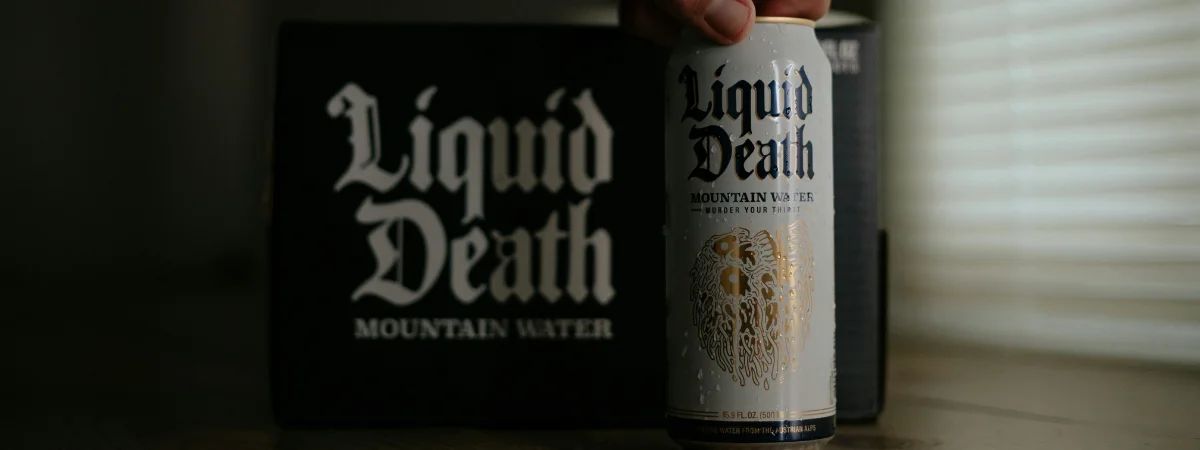
For a contrasting "cover the product / own the moment" energy in a different category, see how brands play with attention in posts like Heinz's cover-up marketing or Liquid Death's Murder Your Thirst. Different mechanics. Same demand for distinctiveness.
The Cadbury Gorilla ad is old enough for nostalgia and still sharp enough for working briefs.
Gorilla was a big-brand film. Most UK advertisers today also run creator and UGC systems. Those are not opposites. They are different tools.
Big film creates a peak cultural moment and a memory structure. Creator and UGC work create volume, proof, product context and platform-native trust. A modern plan often needs both: a distinctive brand idea that people can recognise, and creator execution that shows the product in real hands.
Talent and creators are also part of how brands buy cultural fluency now. Soft note only: BlackFire's talent work sits in that modern creative power layer. It does not replace a strong brand idea. It can carry one further, faster, across platforms Cadbury did not have in 2007.
The mistake is treating UGC as a cheaper gorilla. Raw talking heads will not recreate a ninety-second cultural event. The opportunity is using Gorilla's principles (feeling, distinctiveness, sonic or visual ownability) inside shorter, platform-native formats.
The Cadbury Gorilla ad aired in the UK in 2007, created by Fallon London for Cadbury Dairy Milk, with Phil Collins' "In the Air Tonight" as the soundtrack.
The creative bet was brand feeling over feature proof. Cadbury needed people to feel something about Dairy Milk again. The gorilla and the music delivered surprise and joy; the branding owned the moment without a melting-bar sequence.
Yes, as a principles case, not a format to clone. Hooks, distinctive assets, sonic structure, fame-aware media and a clear split between brand film and performance creative still apply on modern platforms.
Meerkats built a long-running character world from a name pun. Gorilla was a peak unexpected film about music and feeling. Both are UK advertising case studies in distinctiveness. They teach different operating systems.
If your brand is stuck in product-demo loops, or you have creative that looks busy but does not get remembered, start with the commercial job: fame, feeling, or conversion. Then brief creative and media to match.
BlackFire can help you pressure-test campaign ideas, build paid media that respects brand film and performance, and connect social, UGC and talent execution without flooding the world with more forgettable content. Explore paid media, social media management and UGC, or get in touch via the site when you want a straight commercial conversation.
Fame, feeling, or conversion. Then brief creative and media to match.
Explore paid media
No-fluff takes on what brands get right, get wrong, and stay strangely quiet about - delivered straight to your LinkedIn feed. Free, and worth the inbox space.
Subscribe on LinkedIn