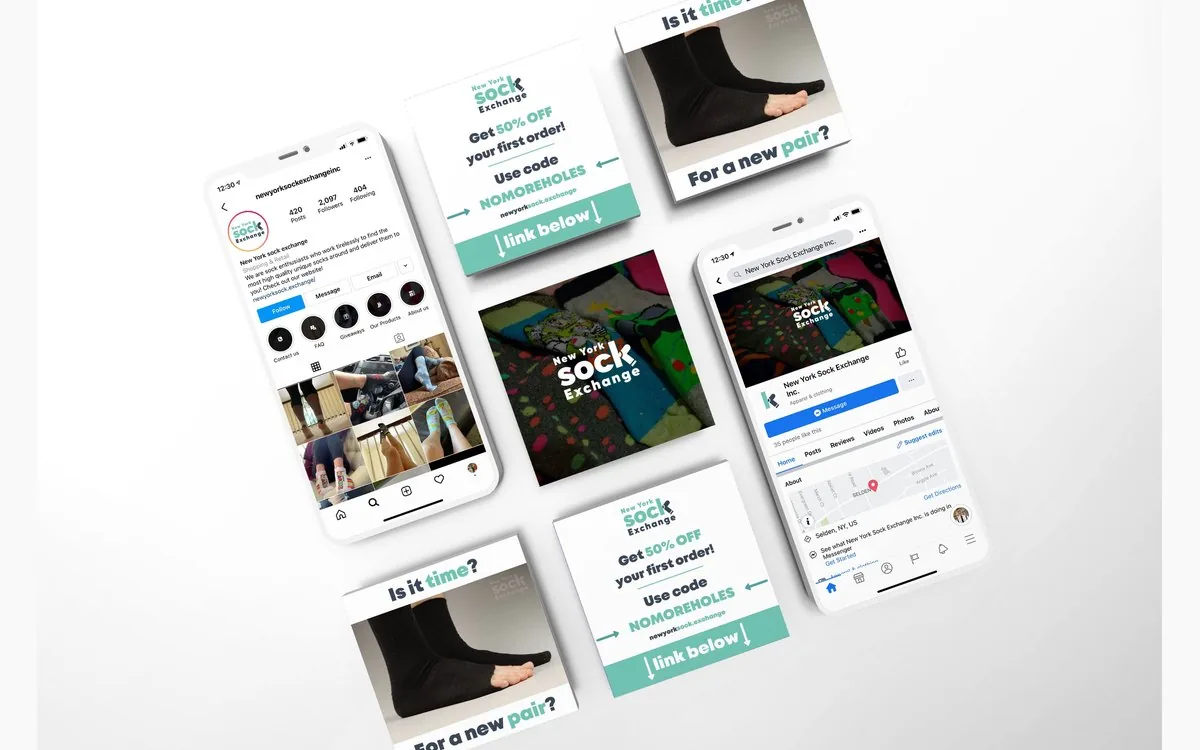
B2B Lead Generation
Mazuli
Read case study →
Two platforms, two completely different jobs. Pick the wrong one and you'll conclude "ads don't work."
Here's the one-line answer most agencies talk around: Google Ads captures demand that already exists - people actively searching for what you sell. Meta Ads creates demand - putting you in front of people who aren't looking yet but would buy if they saw you. Neither is "better." The right one depends on whether your customers are already searching for your product, or whether they don't yet know they need it.
Get that distinction right and the rest of the decision is straightforward. Get it wrong and you'll burn a budget on the wrong platform and conclude "ads don't work." Here's how to choose.
| Google Ads | Meta Ads | |
|---|---|---|
| Catches | Demand that exists (people searching) | Demand you create (people scrolling) |
| Best for | High-intent, local services, B2B, "I need this now" | Impulse, lifestyle, e-commerce, brand awareness |
| Intent level | High - they're already looking | Low to medium - you interrupt them |
| Cost per click | Higher, varies wildly by sector | Usually lower |
| Creative needs | Keywords and ad copy | Strong visuals, video, scroll-stopping content |
| Works best when | People know the solution exists | People need to be shown the solution |
Google Ads is demand capture. Someone types "emergency boiler repair Leeds" or "accountant for limited company" - they have a problem, they want it solved now, and you can put yourself at the top of that result. The intent is already there; you're just making sure they find you instead of a competitor.
Choose Google first if:
The catch: you're bidding against everyone else who wants those same searches, so competitive sectors get expensive fast. And Google Ads only works if people are already searching for what you offer. If they don't know your product exists, no one's typing it into Google - and that's exactly where Meta comes in.
Meta Ads (Facebook and Instagram) is demand generation. Nobody opens Instagram intending to buy - but a strong piece of creative in front of the right audience can make them want something they weren't looking for ten seconds earlier. You're not capturing intent; you're manufacturing it.
Choose Meta first if:
The catch: lower intent means you need volume and sharp creative to make the maths work, and you'll spend the first couple of weeks testing angles to find what lands.
We ran a paid-social lead-gen campaign for a premium glazing client on Meta that produced 241 qualified leads at £7.34 each - proof that "low intent" doesn't mean low value when the targeting and creative are right. (See the Mazuli case study.) On the other side, when we launched an e-commerce hair-loss brand, search and a conversion-built store did the heavy lifting because those buyers were already looking. (See the SuperGro case study.) Same agency, opposite platforms - because the goal was different.
Management fees are similar - a UK agency typically charges £500 to £2,500 a month to run either platform, or 10-20% of your ad spend, on top of the spend itself. The real difference is in the spend:
This is why cost per click is a vanity metric. The number that matters is cost per result - per lead, per sale, per booking. A £4 Google click that converts at 10% can be far cheaper per customer than a 40p Meta click that converts at 0.5%. Always judge a platform on what each outcome costs, not what each click costs.
Eventually, yes - the two work best as a pair. The classic pattern: Meta to create awareness and demand, Google to capture it when those people later search for you. Someone sees your product on Instagram on Monday, searches your brand on Google on Thursday, and buys. Meta planted it; Google closed it.
But if you're starting out with a limited budget, don't split it thin across both. Pick the one that matches your goal, fund it properly for at least three months, learn what works, then expand. A small budget spread across two platforms usually underperforms the same budget focused on one.
Ask yourself: are my customers already searching for what I sell?
That single question gets most small businesses to the right starting point. The nuance - audiences, creative, budgets, bid strategy - is where an agency earns its keep, but the platform choice itself isn't complicated once you frame it around intent.
That's exactly the conversation we have on a call - we'll tell you where your budget will work hardest before you spend a penny.
Book a callNeither is universally better. Google Ads is better when people already search for what you sell (services, trades, urgent needs). Meta Ads is better for visual, impulse, or e-commerce products where you need to create demand. Match the platform to whether the demand already exists.
Meta usually has a lower cost per click, but Google often has a lower cost per result in high-intent categories because the traffic converts better. Judge by cost per lead or sale, not cost per click.
Enough to fund one platform properly for at least three months - for most UK small businesses that means a few hundred to a couple of thousand pounds a month in spend, plus management. Spreading a small budget across both usually performs worse than focusing it on one.
Yes, and at scale they complement each other - Meta creates demand, Google captures it. But with a limited budget, start with one, prove it works, then add the second.
Both can drive traffic from day one, but expect two to four weeks of testing to find the winning audiences and creative before the cost per result settles. Anyone promising instant profitable results is guessing.
No-fluff takes on what brands get right, get wrong, and stay strangely quiet about - delivered straight to your LinkedIn feed. Free, and worth the inbox space.
Subscribe on LinkedIn